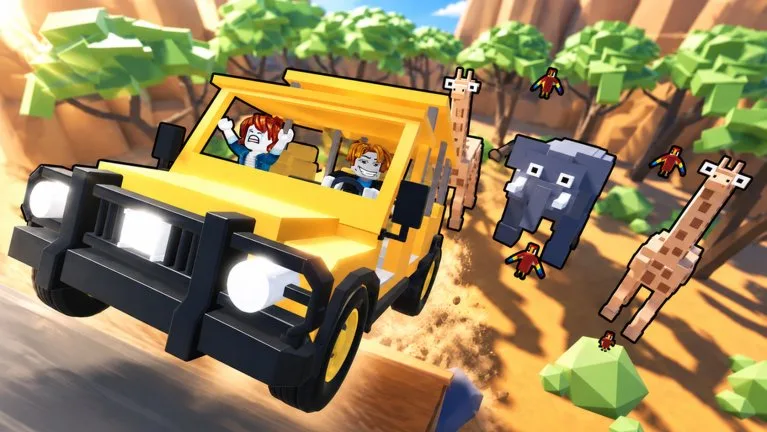
A Film Animals day is one contract. The crew wakes at camp, one player carries the camera, passengers fill the vehicle, and the route board offers a safe route or a dangerous route. You film wildlife, bring the cassette home before dark, and play it on the camp TV. That review pays the shared wallet and moves the day's quota. Sleep in a bed to close the day. The next morning the target is higher.
The official loop is the same in the Roblox listing: film wild animals, dangerous stunts, and funny moments; review the footage at camp for money and the quota; upgrade the vehicle and gear; keep passengers safe; return before dark or be chased. The experience is built for 1 to 5 players by ChrisBacker1993.
Before the vehicle moves
- Pick up the camera at camp. Crews start with one main camera, so agree who films before anyone sits down. An extra camera exists behind a paid +1 Camera option.
- Fill seats before you lock a route. Read each passenger description. Some passengers bite, and at least one traveler type was locked behind Robux and could be declined at no cost. Observed traveler labels include tourist, doctor, racer, tribesman, and daredevil. Those are passengers, not the lobby classes.
- Food and drinks are already on the left and right of the bus, with sandwiches in the back. Passengers do not feed themselves.
- On a first day, take the safe route. The board's trade is more danger and better footage, and the better footage counts only if the tape comes home.
Buckle seatbelts before you roll. The game warns that an unbelted rider can be kidnapped by wildlife. Watch fear bars while you drive. A full fear bar means an empty seat. One old explorer ran off mid-trip when his bar filled. Hand over food or water before that happens.
What to point the camera at
Only animal footage earns money. Camp, campfire, moon, and people shots can raise views and still pay nothing. The tutorial tells you to film different animals so the tape is worth more. Dangerous animals pay more than ordinary ones, and an attack clip can be tagged Danger Shot, which is when the review payout jumps. You can record from inside the vehicle, including the driver.
Three HUD reads matter during the drive:
| Readout | Where players look | Use |
|---|---|---|
| Day clock or minutes left | Top right | The return deadline |
| Animal indicator | Top of the screen | Which way wildlife is |
| Day earnings | Bottom left | Money so far today |
The main battery drains while you film and a dead camera stops recording, including the flash. One crew saw 60 percent mid-run. Spend charge on animals. A separate vlog camera was said not to use that battery; that is a single observation, so assume the main camera drains until you test it.
If the camera holder is knocked down, the camera drops where they fell. Do not flee an elephant and forget which way it went.
The clock and the drive home
Days are a few real-time minutes, not a long afternoon. One crew watched five minutes become about three and a half while they were still filming, then left with two minutes left. Another crew read a clock at 6:00 on departure and later 1:00 as afternoon. Those two displays were seen in different sessions, so use whatever your top-right indicator actually shows.
Head for the cave while minutes remain. Crews treat the cave as the safe anchor and navigate with its distance readout. Quoted distances such as 36 or 100 miles are noisy and the unit is not confirmed. A second cave has been seen, so the readout is a direction, not a unique pin.
At camp, insert the cassette into the TV and let the clips play. Money is paid at review, not while you are still in the field. One crew almost drove off without depositing. Sleep after the review. A passed day can still list lost passengers and still award a ticket. One summary showed an easy pass, 66 percent, two people lost, and a ticket.
What the game does if you miss the quota entirely is not fully shown. See Pass the daily quota and Return before dark before you treat a short day as harmless.
After the first payout
Shared cash buys camp gear such as a first aid kit, field notes, and water. Field notes display that new discoveries are worth more today. The vehicle can gain seats and parts between days. Repair a burning or crawling bus with the field wrench before the next departure. The full shopping list is in Camp gear, and the car itself is in Keep the safari vehicle alive.
Lobby classes, B-Coins, leaves, and trophies sit outside the safari day. You do not need a perfect class to finish day one. Classes and lobby rolls covers that after the loop feels familiar.